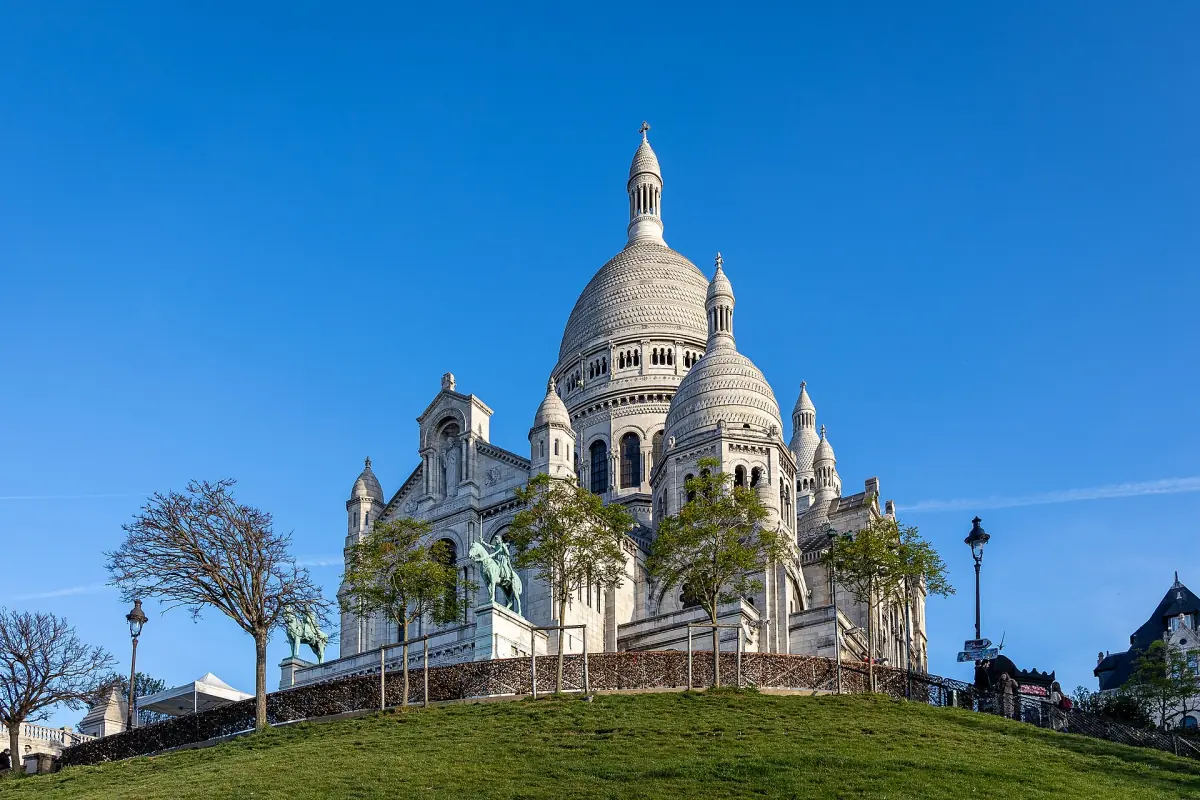
The history of Sacré-Cœur in short
The basilica grew out of a vow. On 8 December 1870, during the Franco-Prussian war, Alexandre Legentil wrote down a first version of a national vow to build a church dedicated to the Sacred Heart. He reworded it in January 1871, and Rohault de Fleury joined the project. The Paris Commune followed, from 18 March to 28 May 1871. The decision to build was therefore formulated before the Commune. Later readings tie the church to the war and its aftermath, and the political and religious meaning is still read in different ways.
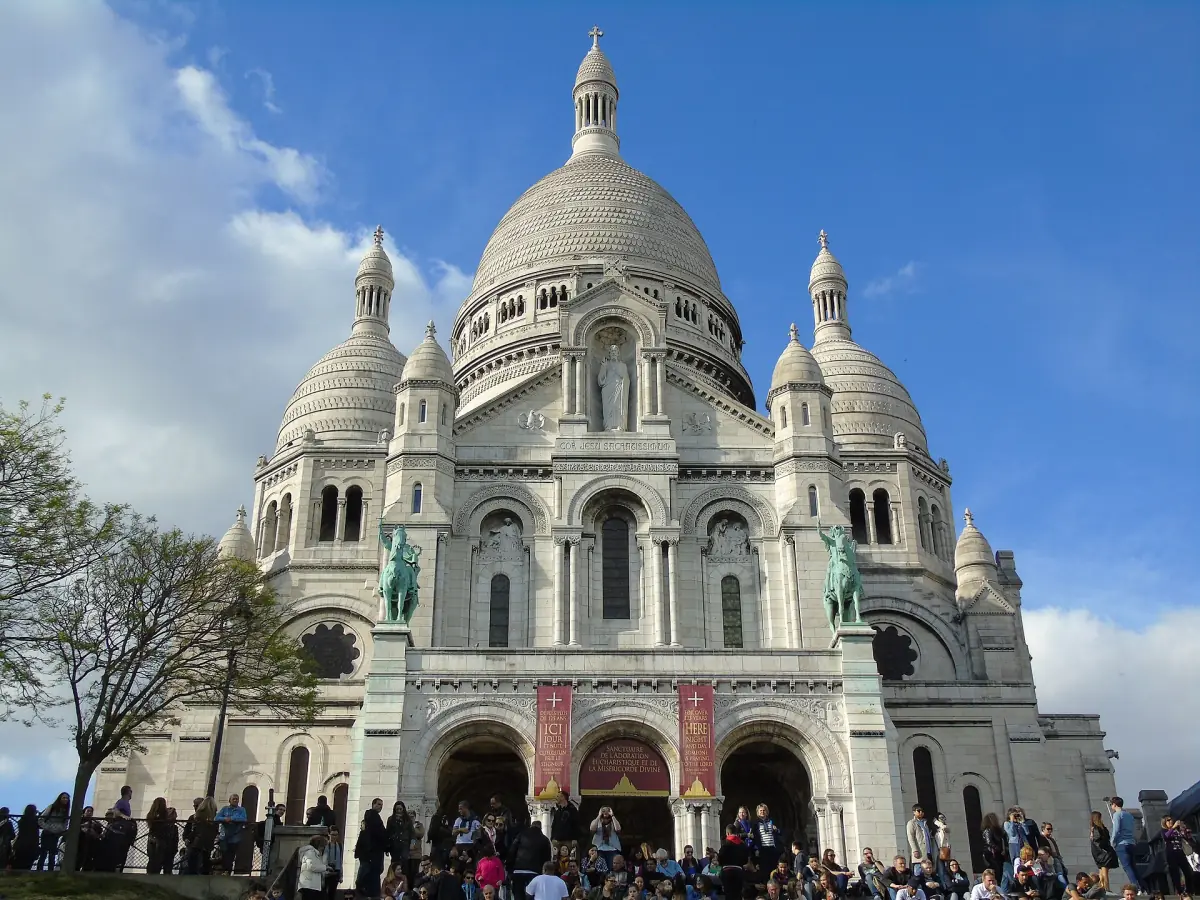
A law of 24 July 1873 declared the church to be of public utility, to be financed by subscription and dedicated to public Catholic worship. The foundation stone followed in 1875, and the church was consecrated on 16 October 1919. If you want the figures, the facts page collects them. For how the building was designed, see architecture.
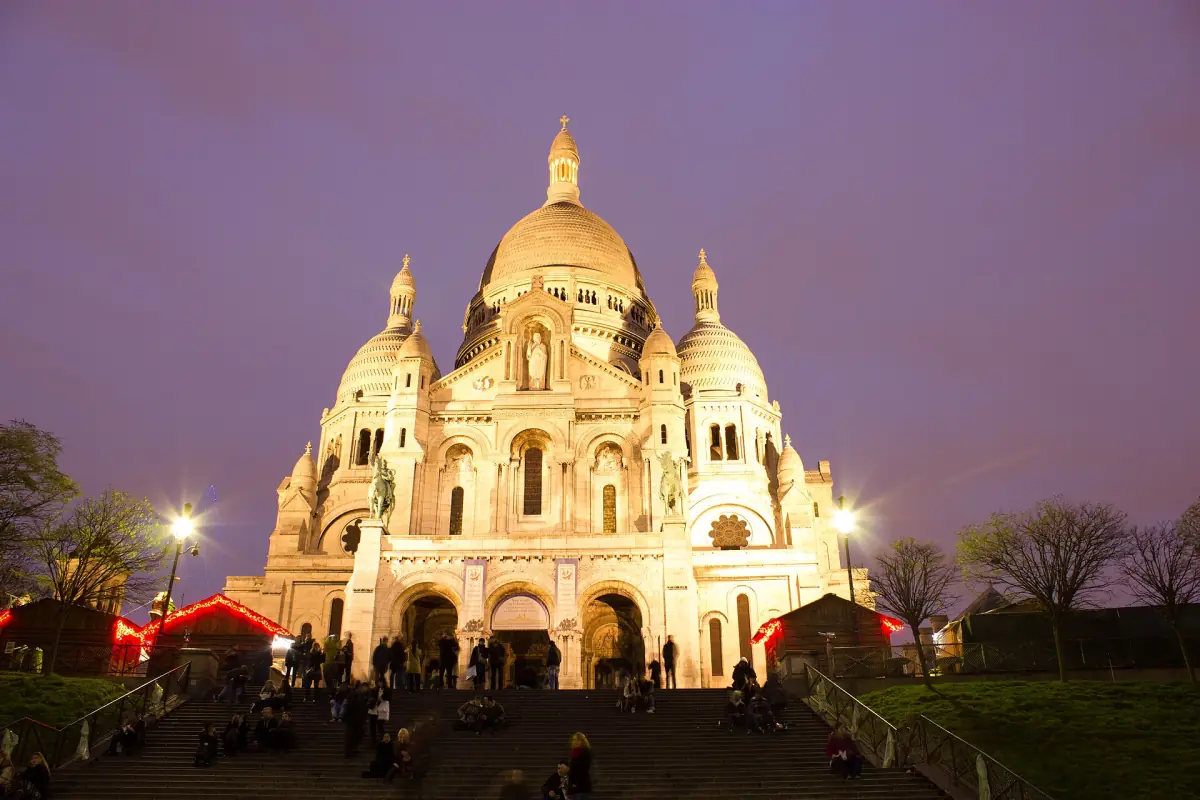
Timeline from the vow to the consecration
The key dates in order.
| Date | What happened |
|---|---|
| 8 December 1870 | Legentil writes the first version of the vow. |
| January 1871 | The vow is reworded, and Rohault de Fleury joins. |
| 18 March to 28 May 1871 | The Paris Commune. |
| 24 July 1873 | A law declares the church of public utility. |
| 1874 | Paul Abadie wins the architectural competition. |
| 1875 | The foundation stone is laid. |
| 1 August 1885 | Perpetual adoration begins. |
| 1891 | Services begin in the church. |
| 1914 | The bell tower is completed. The planned consecration is postponed by war. |
| 16 October 1919 | The basilica is consecrated. |
| 1923 | The apse mosaic is inaugurated. |
For most readers: remember three dates, 1870 for the vow, 1875 for the first stone and 1919 for the consecration. Building is often summed up as 1875 to 1914, but furnishing carried on after that.
Our pick: history on foot
This walk combines the Place du Tertre with a visit inside the basilica.
Hand-picked tours, booked through GetYourGuide. Prices are indicative starting prices in euros (as of October 2026). Tap a tour for live availability and the current price in your currency.
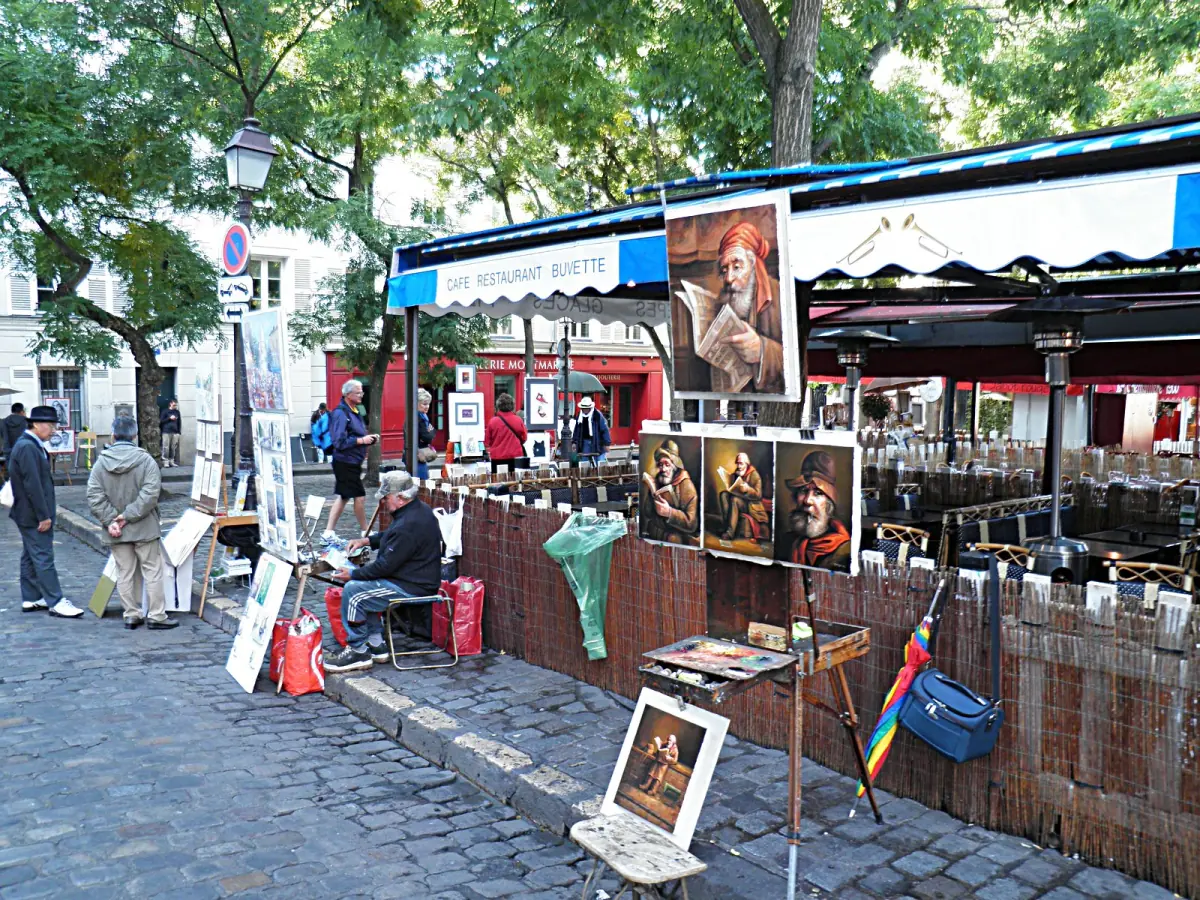
Montmartre tours with the story of the basilica
Guided walks around Montmartre that put the basilica in context. Entry to the church is free, and the dome is ticketed separately.
Building the basilica
From competition to the first services.
The competition
Paul Abadie won the competition in 1874. The competition drew between 77 and 87 entries. Abadie died in 1884, and other architects continued the work, so the basilica is not the work of one hand across all its phases.
Adoration and services
Perpetual adoration began on 1 August 1885 and has continued since. Services started in 1891, years before the building was finished.
Delay and consecration
The consecration was planned for 1914 and postponed by war. It finally took place on 16 October 1919.
After the consecration
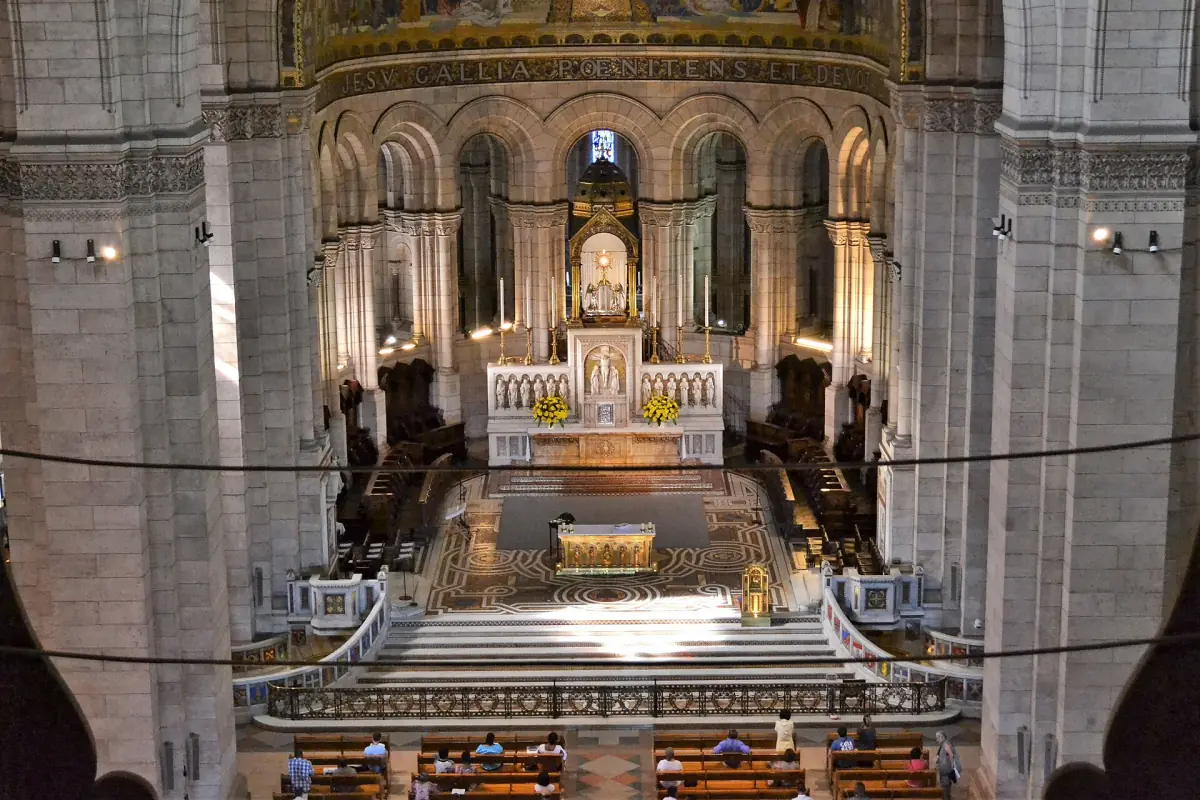
Work on the interior did not stop in 1919. The apse mosaic was inaugurated in 1923. Bombs in April 1944 destroyed all the windows of the time, and new ones were installed between 1946 and 1977.
More recently the basilica has been the subject of protection and restoration. The monument was inscribed in December 2020 and classified by decree on 13 December 2022, including the crypt and the lower crypt. The high altar was restored in spring 2025, and restored wooden panels returned to the organ gallery in autumn 2025. The great organ itself is being restored until the end of May 2027.
Today it remains a place of pilgrimage with continuous adoration, and a church you can enter without a ticket. Read more in inside the basilica.
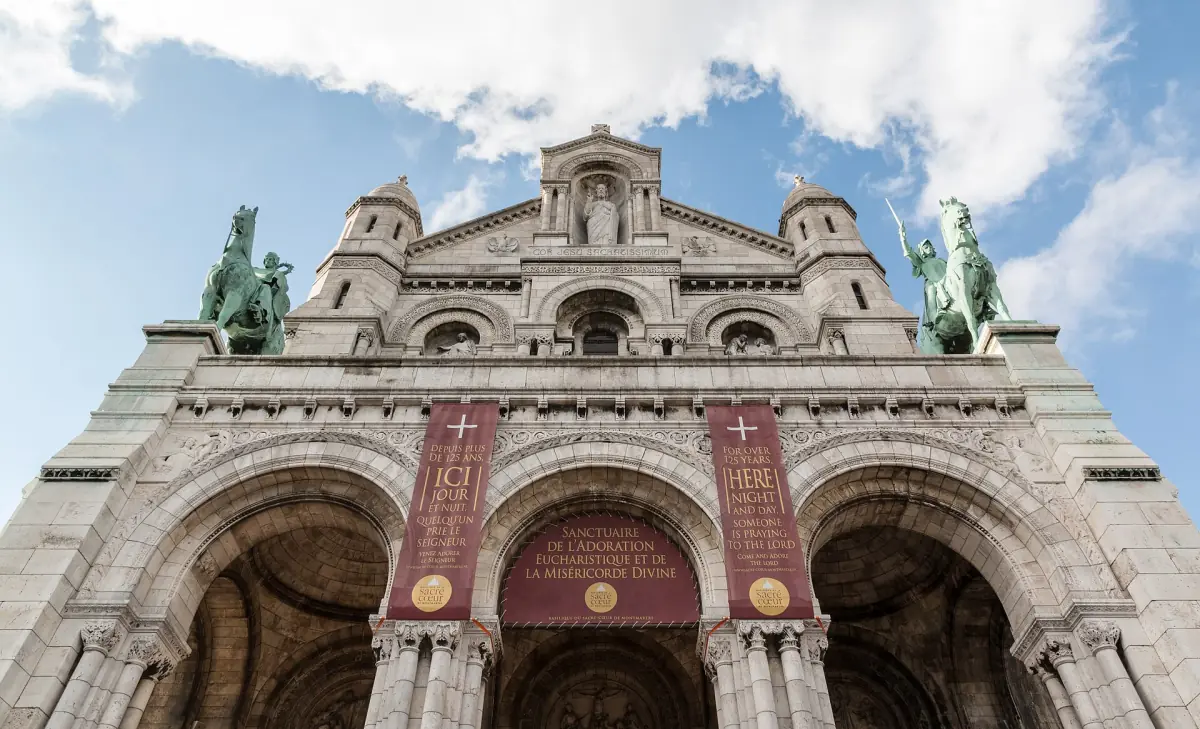
A much older Paris church
For comparison.
If the story of a Paris church from the Middle Ages appeals to you, the cathedral on the Île de la Cité has a far longer history, told in the Notre-Dame history guide.
Seeing the history on your visit
Where the story shows up inside and outside.
The apse mosaic
The mosaic of 1923 is the largest piece of the interior and the clearest sign that the decoration ran on after the consecration. See inside the basilica.
The windows
The windows you see today date from 1946 to 1977, because the earlier ones were lost to bombing in 1944.
The prayer
Adoration has gone on since 1885. If you come in the early morning or the evening, you may see it in action. Keep quiet and respect the prayer areas.
Sacré-Cœur history: frequently asked questions
Why was Sacré-Cœur built?
It grew out of a national vow first written down on 8 December 1870 during the Franco-Prussian war. The vow was formulated before the Paris Commune of 1871. Later readings link the church to the war and its aftermath, and its meaning is still read in different ways.
When was Sacré-Cœur built?
The foundation stone was laid in 1875, services began in 1891 and the bell tower was completed in 1914. The basilica was consecrated on 16 October 1919. The mosaic followed in 1923.
Who designed Sacré-Cœur?
Paul Abadie won the competition in 1874. After his death in 1884 other architects continued the work.
Was Sacré-Cœur paid for by donations?
A law of 1873 set it up to be financed by subscription and dedicated to public Catholic worship. That describes the law of the time, not the legal position today.
When did perpetual adoration begin?
On 1 August 1885. Prayer has continued day and night since.
Is Sacré-Cœur a protected monument?
Yes. It was inscribed in December 2020 and classified by decree on 13 December 2022.